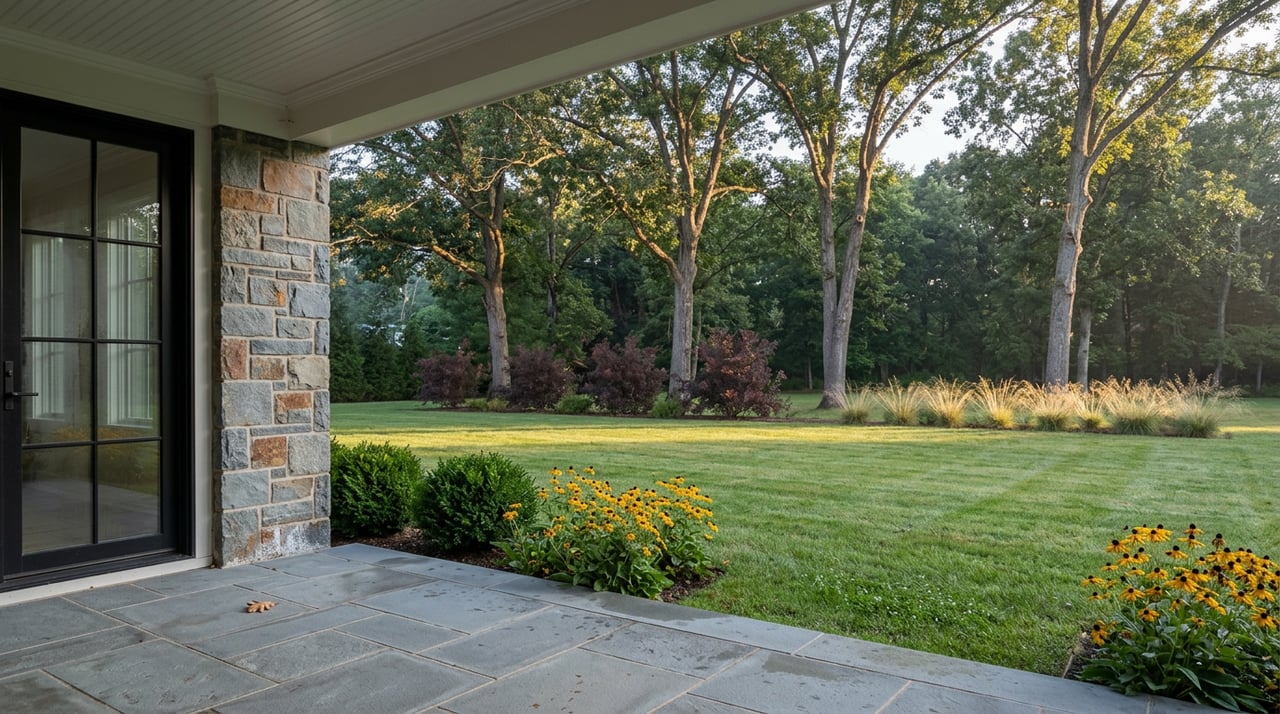
Two buyers tour Caledonia the same weekend. One falls for a new build in a subdivision with sidewalks and a shared mail kiosk. The other falls for a stone-and-cedar home on three acres with a pole barn and a view that costs nothing extra. Both write offers within days of each other. Both are approved buyers with solid credit. One closes in three weeks. The other is still waiting on paperwork six weeks later, and it has nothing to do with the appraisal coming in low or the inspector finding a cracked foundation.
It comes down to what's underneath the house: a pipe running to a village main, or a tank and a drain field that nobody has looked at in years.
Caledonia's Utility Map Is Not One Thing
Caledonia looks like a single market from the outside, all Fighting Scots pride and a school district families move here for. Underneath, it's a patchwork. New communities like Valley Point and The Preserve at Jasonville Ridge advertise natural gas and city sewer as selling points, meaning a buyer there is plugging into Caledonia Township's water infrastructure the same way they would in a first-ring Grand Rapids suburb. Other listings tell a different story. One recent buildable lot in the Caledonia school district was marketed around its Kent County Health Department approval for a septic system, evaluation already on file. Another, just under three acres across from Saskatoon Golf Club, noted a completed perc test and septic evaluation as a selling point, not a red flag. And in the older village core, it's common to find a home running on its own private well with the option to hook into the village sewer line rather than a mandate to do so.
That last detail matters more than it looks. It means the same three-block radius in the Village of Caledonia can contain a home already tied into municipal sewer, a home on well and septic with a sewer hookup available if the owner chooses to pay for it, and a home on well and septic with no municipal line anywhere nearby. Three homes, three very different inspection paths, one zip code.
Nobody Is Required to Check the Tank
Here is the part that surprises most buyers moving from a city where water and sewer are simply utilities you sign up for. Only eleven of Michigan's 83 counties have established septic codes that require an inspection at the point of sale, according to Clean Water Action's review of septic oversight across the state. Kent County is not one of them. Its program is voluntary, meaning there is no ordinance forcing a seller to prove the tank is sound before listing, and no requirement that a buyer see a recent evaluation before closing. The Kent County Health Department does offer well and septic evaluations, and plenty of sellers order one voluntarily to smooth a sale, but nobody is compelling it.
So if the county isn't the gatekeeper, who is?
The Loan Type Becomes the Inspector
In practice, the thing that actually forces a look at the well and septic system is the buyer's financing, and the four common paths treat it very differently.
| Loan Type | Water Test Required | Septic Inspection Trigger | Typical Setback Enforced |
|---|---|---|---|
| Conventional | Usually not, unless a hazard is flagged | Only if appraiser or another party reports a problem | Rarely checked unless flagged |
| FHA | Yes, water quality and flow (minimum 3 gallons per minute) | Only if the appraiser sees signs of failure | 50 ft to tank, 100 ft to drain field (75 ft in some cases) |
| VA | Yes, valid for 90 days | Appraiser does a visual check; full inspection only if a problem is flagged or local rule requires it | Local health authority standard, deferred to county |
| USDA/RD | Yes, for every well-served property | Always required, regardless of visible condition | Follows HUD distance guidance, similar to FHA |
A buyer paying cash or using a conventional loan for that stone house on three acres might never trigger a formal septic look unless something looks visibly wrong during the walkthrough. A buyer using an FHA or USDA loan for the exact same house will have a water test ordered as a matter of course, and if the appraiser sees standing water or unusually lush grass over the drain field, a full septic evaluation gets scheduled before the loan can close. Same house, same tank, two completely different closing calendars, and the difference isn't the property. It's the paperwork the buyer brought to the table.
The Setback Gap That Can Stall a Financed Offer
Even when a system passes on its own merits, there's a second wrinkle that catches people off guard: Michigan's own minimum standards are looser than what federal loan programs require.
Michigan's state well code sets a minimum of 50 feet between a well and a septic tank, and as little as 25 feet to a percolation trench. That's the bar a system needs to clear to be legal under state and county rules. FHA guidance asks for the same 50 feet to the tank, but pushes the well-to-drain-field distance out to 100 feet, sometimes reducible to 75 feet with local health authority sign-off. USDA follows similar HUD guidance.
That gap means a well and septic setup that has been perfectly legal in Caledonia for forty years, fully compliant with Michigan and Kent County code, can still fail an FHA or USDA appraisal purely on distance. When that happens, the fix isn't a repair. It's a survey to confirm actual measurements, sometimes a variance request to the Kent County Health Department, and occasionally a switch in financing altogether. None of that is a defect in the home. It's a mismatch between state code and federal lending code that only shows up once a specific loan type is already in motion.
What the Aging Infrastructure Actually Means Here
None of this is theoretical for Kent County. Clean Water Action's estimate puts the number of failing septic systems in the county at roughly 11,250, leaking an estimated one million gallons of raw sewage into area groundwater every day. That figure covers the whole county, not Caledonia specifically, but it's a useful reminder of what "no inspection required" actually means in practice. It doesn't mean the systems are fine. It means nobody is required to check, so the ones with problems keep operating quietly until a lender, an appraiser, or a curious buyer happens to look.
What the Price Data Is Actually Telling You
This infrastructure split shows up in the numbers too, and not in the way a single median price suggests. In a Redfin market snapshot last updated in July 2026, the Caledonia area showed a median sale price near $450,000, with homes averaging just 9 days on market and selling at 99.9 percent of list price, a clear seller's market by any measure. But look at the wider range of home values across the area and the spread is enormous, from roughly $83,000 up to $1.76 million, with an estimated median value near $439,000. That's not simply a story of small starter homes versus sprawling estates. Part of that spread is the utility question itself: a modest well-and-septic home on a modest lot prices very differently than a new build wired straight into city sewer, even before finishes and square footage enter the conversation.
New listings back this up. As of mid-August 2026, roughly 21 new listings were on the market in Caledonia at a median asking price of $422,000, with homes typically going pending in about 15 days and drawing around four offers apiece. In a market moving that fast, there's no room to discover a setback problem after you're already three weeks into a contract. The buyers who avoid delays are the ones who ask the utility question before they fall for the house, not after.
Before You Write the Offer
A few questions are worth asking before you tour, not after you've already pictured your furniture in the living room.
- Is the property on city water and sewer, a private well and septic system, or a hybrid where a well exists but a sewer hookup is available?
- If it's well and septic, is there a Kent County Health Department evaluation on file, even though one isn't required?
- Does your loan type require a water test or septic inspection, and if so, how many days will that add to your closing timeline?
- If you're using a VA loan, is your water test still within its 90 day validity window relative to your expected closing date?
A Few Direct Questions
Does Kent County require a septic inspection before I can sell my home? No. Kent County's program is voluntary, unlike roughly a dozen Michigan counties that mandate a point of sale inspection. Many sellers order one anyway to avoid surprises during a buyer's loan process.
What happens if my well and septic setup meets Michigan code but not my lender's setback rule? It usually means a survey to confirm exact distances, and sometimes a variance request through the Kent County Health Department. It is not a sign the system itself is failing.
How long is a well water test good for? For VA loans, results are valid for 90 days from certification. Other loan programs may set their own windows, so it's worth confirming with your lender before you schedule the test relative to your target closing date.
Buying or selling a home in Caledonia means understanding which of these paths applies to the specific property you're chasing, not the market average. If you're weighing a Valley Point new build against a rural acreage parcel, or trying to figure out why one financing path moves faster than another, Kristina L Tanner can walk through the utility and loan questions with you before you're locked into a contract timeline. Visit the Caledonia neighborhood guide or reach out directly to talk through your specific situation.